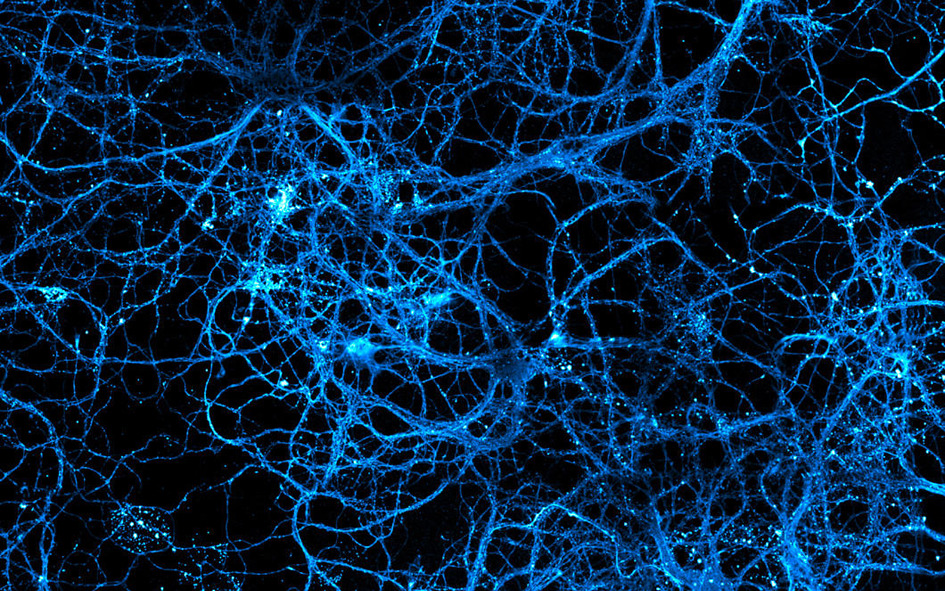
Technology: Second Harmonic Generation (SHG)
A label-free nonlinear optical technique in which certain structures generate light at exactly half the excitation wavelength. SHG highlights highly ordered molecules (such as collagen or microtubules), providing high-contrast images without photobleaching or staining.
Maintain of the mouse living organs under 2P microscope Bruker 2P+, thanks to perfusion and oxygenated medium
Bruker 2P+, Discovery laser (680 to 1340 nm), mouse anesthesy and stabulation. Cleared mouse organs (gut, lymph nodes..) and 2P microscopy
To decipher Inflammatory and cardiovascular diseases, multiplex imaging and cytometry pipelines include the entire process from sample preparation, image acquisition to image analysis and quantification. Our workflows are adpated to mouse or human lymphoid organs and blood . They employ techniques such as confocal spectral imaging and cytometry-based analysis (spectral, sorting, and analysis).
To tackle complex biological questions in aging and geroscience, we design and implement advanced multimodal, multiparametric, and multiscale pipelines in imaging, flow cytometry, and image flow cytometry. Our workflows span the entire process—from sample preparation to data acquisition and multidimensional analysis. We investigate biological systems across multiple scales, from subcellular structures such as mitochondria to organoids, whole organs, and even entire organisms. Our pipelines are tailored to a wide range of tissues, including adipose tissue, muscle, bone marrow, skin, blood, and periodontal tissue. In addition, our platforms provide access to complementary techniques such as second- and third-harmonic generation (SHG, THG), spectral confocal imaging, high-content imaging, image-based cytometry, conventional and spectral flow cytometry, and mechanobiological analysis. These integrative approaches are designed to support comparative and translational research across multiple species, including fish (with an emphasis on the African turquoise killifish as a model of aging), drosophila, mice, and humans.
Organoids (lung, endometriosis, digestive tract, adipose tissue, bone marrow, skin, bladder, fallopian tube): integrative analysis (sample preparation, acquisition – light sheet, confocal, two-photon, high-content screening, multiparametric analysis, 3D imaging, analyses, flow cytometry and imaging)
Correlation microscopy between super-resolution acquisition and collagen harmonic signalling